Showing posts with label Landscapes. Show all posts

Snapshot: Perito Moreno Glacier

Perito Moreno Glacier

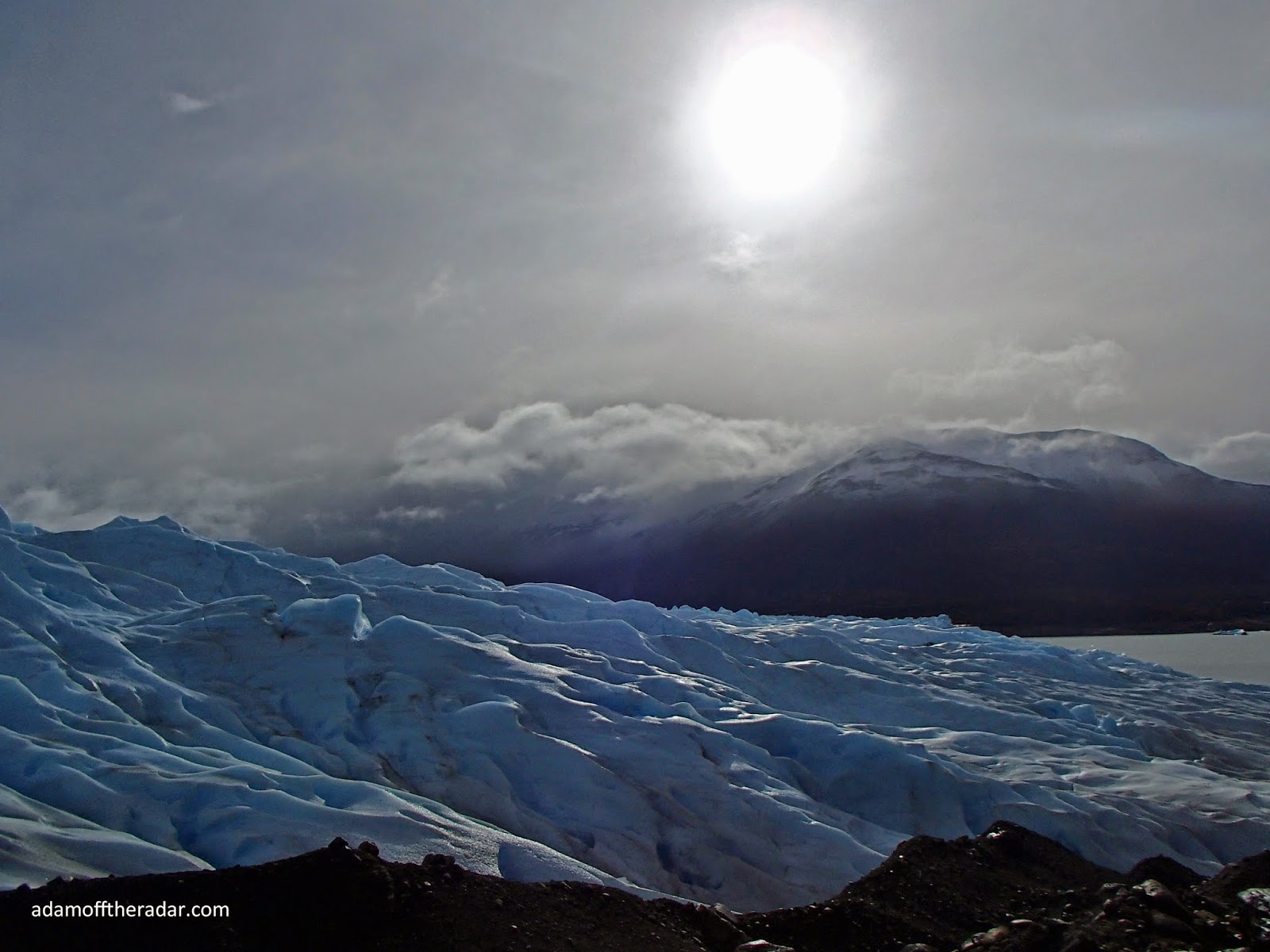
This shot was taken on the edge of the Perito Moreno glacier in Argentina's Los Glaciares National Park, around half an hour into the 'Big Ice' tour.

Snapshot: Red Lagoon


La Laguna Colorada – or Red Lagoon – is one of the many unusual natural phenomena you can see as part of a jeep tour in southern Bolivia. The water is dyed red by the sediment and pigmentation of some algae. 

Reasons to Get Off the Sun Lounger in Gran Canaria

Gran Canaria

Gran Canaria has long been a hugely popular destination for British tourists, and is a destination synonymous with no-frills sunshine holidays. The Spanish island’s location just off the coast of West Africa means it’s a magnet for northern European sun worshippers. Many visitors hardly stray from the coastal resorts, which is a real shame as there are lots of easily-accessible sights to see. 

We left the sun lounger behind and set off exploring the other side of Gran Canaria.

7 Tips for Enjoying Your Bolivian Salt Flats Tour

bolivian salt flats tours

Every year more and more backpackers head to southern Bolivia to see the Bolivian salt flats and the various other natural wonders scattered between the mining town of Uyuni and the Chilean border.

The only way to take in these sights is by 4x4, with tour lengths ranging between one and five days. We chose the three day option which took us over the salt flats, past the red lagoon and down to the thermal baths near the Chilean border before returning via San Cristobal.

Whilst there are some amazing landscapes to see, with large distances to travel, basic facilities and extreme temperatures it can be a challenging experience at times. Here are seven tips to help you get the most out of your Bolivian salt flats tour.


1. Do some background research on tour companies


Online message boards are rife with stories of less than reputable companies taking tourists into the desert from the dusty town of Uyuni and drivers' lack of sobriety is an issue that crops up again and again. Our driver from Empexa Tours (who as far as we know was as dry as the salt flats throughout) made light of this himself, asking me if I was worried he was going ‘to go off and get drunk’ when he picked up on my anxiousness to be back in Uyuni in time for our night bus.


Clearly its hard to establish the trustworthiness of a driver prior to the tour but by doing some background research you can at least have an idea of two or three well-known companies in Uyuni to choose from, even if you’re not planning on booking in advance.

Our tour with Empexa was very good, apart from some confusion at the beginning when there was no driver or jeep for us! We think this was the fault of the third party site we booked with (boliviatravelsite.com.


Driving through the desert on Day 2
2. Choose the right length trip

The majority of tour operators will provide a choice of three different tours and largely follow the same route down to the border with Chile and then back again in a circle. If you’re just interested in seeing the nearby salt flats, the ‘one day’ option will be fine. This is usually combined with a visit to the train cemetery.

Most two day tours will take in the Ollague Volcano and perhaps one of the flamingo lakes. Although pleasant enough, for us, these were some of the less essential sections of the tour. Many of the must-see attractions like the Red Lagoon, thermal baths and the Tree of Stone are down towards the Chilean border and only inclwuded in the three-day option.


Unless you’re really only interested in the one day salt flats option, go for the three day rather than the two day tour. For the sake of one extra night it would be a shame to miss so many fantastic sights.


3. Prepare for lack of Wifi


Technophobes and old-school travel purists will love it; everyone else will hate it. The Bolivian salt flats and the surrounding areas are some of the most remote places on earth and Wifi is still a mere pipedream. Organise any important texts/emails/blog updates in Uyuni and then embrace a rare opportunity to disconnect from the technological world!

Definitely no heating or Wifi here


4. Pack clothes for all temperatures


For most, one of the main allures of the Bolivian salt flats and their surroundings are the wide open expanses and unspoilt natural beauty. But, with any wide open space there are some strong winds which can be chilly, even when the sun's beating down.


With much of days two and three of the longer tour spent in desert terrain, temperatures fluctuate hugely. Days can be very hot and there is little to no shade. As soon as the sun sets, the mercury plummets; it’s bitterly cold until sunrise and unless you’ve paid extra, the accommodation will be very basic.

Our accommodation on the second night was barely any warmer than outside.For such a wide range of temperatures, the best option is to have multiple layers to hand and just remove or add them as needed.


5. Have everything you need in the jeep at the start of each day


Depending on the amount of available space in your jeep, your rucksack may be secured under a tarpaulin on the roof during the day, so remember to have everything you need for the day inside the jeep. I left my bathers and towel inside my large bag on day three and could only go knee-deep in the thermal baths.

One essential in-jeep item is sun cream. Whilst it doesn’t always feel particularly hot in some of the more windswept parts of the trip, there is no natural shade and you’ll soon end up the same colour as the Red Lagoon without it.

Wet wipes are also a lifesaver. There are no guarantees of a shower at any point (unless you’ve splashed the cash for better accommodation) and deserts are generally pretty dusty places.
slat-flats-tour
Have anything you need during the day in the jeep - not on the roof

6. Have a great playlist ready

As impressive an array of sights as there is to see, with such huge distances to cover there will still be a lot of hours spent rattling along a dirt track with not a lot to keep you amused. Between us and one of our tour companions we had a decent selection of music..until he left to catch a lift to Chile during the third day and our phone batteries died.

Our driver seemed happy to rely upon less than ten songs-worth of Bolivian pop music for the rest of the trip, but after the tape had been repeated multiple times we were beginning to question our sanity. That said; it was arguably still better than chart music in the UK.

Heading out onto the salt flats on Day 1 in our jeep
7. Don’t sandwich the tour between two overnight bus rides!

In an attempt to save time we decided to catch a night-bus to and from La Paz directly either side of our three day tour. This proved to be one of our bigger mistakes!

A night bus in Bolivia is not the relaxing experience that it might be in more developed countries.  Bolivia’s roads are primitive at best, resulting in a jarring, bumpy overnight ride - definitely not conducive to a good night's sleep. An unwelcome 3 am breakdown and bus change in Oruro also didn’t help.

Having barely slept, when we arrived in the blinding morning sunshine in Uyuni the last thing we wanted to do was spend three days in a jeep. Similarly, after spending said three days in a jeep, the very last thing we wanted was a sleepless nine hour bus ride back to La Paz!

A far better option is to spend a night either side of the tour in Uyuni. If money’s not an issue, you could even consider flying in and out from La Paz.


Read the full account of our three day tour here > 3 Days in the Wild: Salar de Uyuni and Southern Bolivia


3 Days in the Wild: Salar de Uyuni and Southern Bolivia

salt flats uyuni


Southern Bolivia is almost totally uninhabited and one of the most remote places on earth. Whilst the otherworldly Salar de Uyuni has become a must-visit destination for backpackers in South America, the world’s largest salt flat is just one of the many beautiful natural wonders spread over the sprawling emptiness between Uyuni and the Chilean border.

From the red lagoon, geysers and thermal springs, there is plenty to make the sometimes arduous three day round trip well worth it. After all, nothing easy is worth doing right?

Day 1 - Uyuni - Train Cemetery - Salt Flats - Incahuasi Island

We arrived bleary eyed in the small town of Uyuni on the edge of the world’s largest salt flats at 7am after a bumpy and largely sleepless overnight bus ride from the city of La Paz in the north of Bolivia. The blinding sunshine jolted us from our semi-consciousness and we tried to identify our tour salt flat tour company from the collection of similar businesses dotted along the dusty main street.

Having finally found Empexa Tours we introduced ourselves to Marisa the owner with the confidence of having arranged everything in advance, albeit through a third party tour operator. It gradually dawned on us - over the ninety minute wait in the office with an increasingly agitated Marisa – that our confidence was misplaced, and we’d been forgotten about.

Eventually another tour group arrived and we squeezed into the back of the jeep and made our way onto the edge of the desert. Our group consisted of a middle aged Belgian couple, a rather introverted Chilean couple and a lone-travelling Dutch guy in his mid twenties. With seven of us plus luggage, it was cosy to say the least.


train cemetery unyuni

After stopping at the ‘train cemetery’ – a collection of disused steam trains around 15 minutes outside Uyuni - we entered the blinding white expanse of the salt flats, the uninterrupted sunshine intensifying the whiteness yet further. Salar de Uyuni was once a huge fishing lake which dried up leaving a huge expanse of crystallised salt. On our visit it was dry; this meant no large-scale ‘mirror’ effect but an otherworldly, glowing whiteness stretching out to the horizon.

A dry day on the salt flats


We stopped for a lunch of lama steaks and rice on the middle of the salt before José - our driver and guide - demonstrated his potential as a professional photographer by arranging us in some imaginative takes on the traditional salt flat perspective photos!


One of many perspective shots
After a visit to Incahuasi Island - a cactus-covered former fishing spot affording panoramic views across the salt flats - we headed off into the surprisingly early sunset, for a fairly comfortable night at the salt-brick Kachiwasi Hostel.

bolivia salt flats

Day 2 - Ollague Volcano - Hedionda Lagoon - Tree of Stone - Red Lagoon

We awoke around 7am to another gloriously sunny day and left the salt flats behind, gradually ascending into the mountains to the south. We stopped at the foot of the smouldering Ollague Volcano before having lunch at the scenic, flamingo filled Laguna Hedionda (Hedionda Lagoon), backed by snow capped mountains. It felt more crowded than the previous day with around fifteen other jeeps sticking to the same route.


Flamingos at Hedionda Lagoon

It was at this point that José mentioned in passing that time was of the essence as all the other jeep drivers were effectively racing each other to get to that night’s accommodation. We were not, he explained, guaranteed a room for the night and if we were too late we risked a night in the jeep; that’s seven of us in a jeep, with temperatures plummeting to past -10°C after dark.

We were therefore somewhat preoccupied for the rest of the afternoon which included two of the most famous parts of the tour; firstly the Dali-esque Arbol de Piedra (Tree of Stone) – a boulder sculpted over centuries into the shape of a tree. Then, La Laguna Colorada (Red Lagoon) - a large lake dyed a deep scarlet by algae with swathes of bright white salt around the edges. Impressive as they were, by this point we were anxious to make it to the underwhelmingly named ‘Hauchipato Shelter’ for the evening.


bolivia red lagoon
La Laguna Colorada (Red Lagoon)


El Arbol de Piedra (Tree of Stone)
Upon our arrival there was chaotic but ultimately successful scramble for the remaining rooms. To be fair, our accommodation for the night did provide shelter, but little else. Even having put on literally every item of clothing we had brought, we were still bitterly cold. The blood stains on the sheets were also an unpleasant discovery, but I suppose at least we weren’t in the jeep. 

Day 3 - Geysers - Thermal Baths - Dali Desert - Valley of the Rocks - San Cristobal - Uyuni

We got up in pitch darkness at 4am so that we could arrive at the thermal springs near the hamlet of Agua Brava, around an hour and a half away, for sunrise. Normally such an early start is the antithesis of everything I stand for but it was a relief to leave the shelter after a largely sleepless night.

On the way to the springs we stopped at Sol de Mañana (literally ‘sun of the morning’), a collection of geysers spraying hot steam skywards. It was still bitterly cold at this point - José estimated -5 °C but it certainly felt colder – and we took the opportunity to warm our frozen hands in the blasts of hot air. In the distance, amongst the plumes of smoke, the sky began to take on a faint orange hue.


5 am and unbelievably cold at Sol de Mañana

We arrived at the thermal baths just as the sun began to rise across the steaming water before us. We were the first group to arrive and had the place to ourselves. We watched the various birds make their first forays of the day, darting over the face of the water. A dip in the brilliantly warm water was the perfect rejuvenation after a day’s worth of desert dust without a shower.


Sunrise at the thermal baths

After half an hour or so the other tour groups arrived and began to pile into the water. It was at this point that the male half of our Chilean couple –almost painfully reserved until this point – suddenly cast off his inhibitions and stripped naked in front of several jeeps-worth of people in his attempts to dry off. 

Mysteriously though, his omnipresent hat remained on. Our Dutch friend left at this point to make the short journey to the Chilean border, sadly taking his I-pod with him. As good a guide as José was, his enthusiasm for loud Bolivian music wasn’t shared by the rest of us.

The rest of the day was spent driving through the barren red-soil terrain of the Dali Desert, before beginning the long journey north. We stopped to marvel at the Valley of the Rocks; a collection of rocks bearing an uncanny resemblance to various animals including a hawk, parrot and a bear. Thankfully photographic evidence was taken to assure us it wasn’t some sort of desert mirage.

Two of the 'animals' at Valley of the Rocks


From there, the journey back to Uyuni took around three hours including a stop in the village of San Cristobal. The roads gradually improved as we neared Uyuni; dirt tracks gradually giving way to a Japanese chemical company-funded road linking Uyuni to the edge of the desert.

It had been a tiring three days but the truly mind-blowing array of natural wonders we experienced really did make the discomfort and wildly varying temperatures worth it.
Read my essential tips for getting the most from a Bolivian Salt Flats tour.


Big Ice – Trekking The Perito Moreno Glacier


It takes something special to get me out of bed at 5.50 am and the Perito Moreno glacier certainly falls into that category. When planning our South American adventure from a drizzly, leaden sky Britain several months before I was adamant that this jewel of Argentinean Patagonia was a must-see.

We had been told that the cheapest option when visiting Perito Moreno was to see it from the viewing platform on the shorter tour. Whilst that was fantastic in itself, looking back the 350 pesos (about £40) extra we paid to do the ‘Big Ice’ tour and actually walk on the glacier was the best £40 we’d ever spent.

After a semi-comatose (well, I was) 40 minute minibus ride into Los Glaciares National Park from El Calafate the glacier gradually appeared on the horizon. We parked at the visitors centre at the top of the steep hillside leading down to the glacier. Pleasingly, the trees kept the main attraction out of sight at this point, leaving the truly awe-inspiring wow moment of the endless whiteness stretching into the distance until halfway down the staggered staircases. As we took pictures, large chunks of ice creaked and groaned before falling into the water below.


Next stop was the glacier itself, via a short boat ride which dropped us on the shore alongside. It was here that the juxtaposition of trees, grassy hillside and imposing mass of ice was most impressive. The groups ahead of us, already scaling the ice, looked miniscule against the enormous icy backdrop. After a 30 minute walk along side the glacier we attached our crampons (with some help from our guides - some of us more than others) and gingerly started our Big Ice adventure.


In total we spent three and a half hours on the ice – the kind of place where it’s almost impossible to put your camera down for a second. The mist and clouds of the morning sporadically gave away to brilliant sunshine which made for some incredibly scenic views across the now gleaming ice.

By the time we stopped for a surreal lunch by an improbable neon-blue lake in the middle of the glacier, the amount of photos taken was already into the hundreds. The free keying and whiskey whilst we road the boat back courtesy of our fantastic guides Hielo y Aventura was just the icing (excuse the pun) on the cake.


El Calafate: The Gateway to the Glaciers

el calafate glaciars national park


El Calafate is effectively the gateway to Patagonia’s Los Glaciares National Park and the best access point to the breathtaking Perito Moreno glacier. It’s just a two hour flight from Buenos Aires but it’s worlds away from the urban sprawl of the capital, more reminiscent of an alpine village than South America.

Once a tiny provincial village, El Calafate is now home to around 20,000 people, many of which return to the cities of northern Argentina outside of summer time. Sadly we learned that the packs of loveable, friendly dogs that roam the streets are simply left to fend for themselves throughout the winter until their owners come back in spring.


el calafate dogs
Some of the seasonal strays
Whilst the vast majority of people use El Calafate as a base to visit its surroundings, the town is an enjoyable place in its own right. Everything is boutique here from the tiny airport terminal to the improbable, almost tent-like triangular houses that line the dirt tracks on the outskirts of town. Lago Argentino is just a short 10 minute stroll from the centre of town and there are expansive views across the lake from the hillsides that surround El Calafate.

houses el calafate
Triangular houses on the outskirts of town

For such a small town, visitors are really spoilt for choice when it comes to cafes and restaurants. Viva La Pepa, which specialises in both savoury and sweet pancakes, is a must-visit. The quirky miniature watering can filled with carrot sticks that came as a complimentary appetiser might be a bit twee for some, but it seemed like a timely suggestion to eat something healthy after the steak-based excesses of Buenos Aires. Having said that, the enormous banana and chocolate creppe that followed was certainly filed under ‘guilty pleasures’.

A rare moment of healthy eating at Viva La Pepa
La Esquina, found halfway along the Av. del Libertador San Martin (the main street) is also worth a mention; try the steak and cheese sandwich, but not if you’re planning to walk anywhere shortly afterwards. For those not getting up at 6am for a treck the next day, Libro Bar which overlooks the gnome village alleyway of shops just off the main street has a long list of cocktails and, as its name would suggest to Spanish speakers, all sorts of weird and wonderful books.


sunset in patagonia
Sunset over the lake from Nakel Yenu

We spent three very comfortable nights at the Nakel Yenu Hostal which is perched on a hill overlooking the lake, on the way into town from the airport. If you don’t feel like walking down the hill into town, The La Esquina Varela opposite serves a variety of European foods – portions are glacier-sized!